
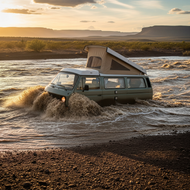
There's nothing quite like the freedom of the open road, the smell of pine trees, and the cozy comfort of your trusty VW Vanagon Westfalia. For many of us, these iconic campers are more than just vehicles; they're mobile homes for adventure. But as we chase those perfect campsites, especially in scenic, often rugged, terrain, it's crucial to be mindful of a hidden danger: flash floods.
Flash floods can turn a serene creek into a raging torrent in minutes, often with little to no warning. As Vanagon owners, our rigs, while capable, aren't immune to the power of swift water. So, before you park that pop-top, let's talk best practices for staying safe in flood-prone areas.
Pre-Trip Preparedness: Your First Line of Defense
- Know Your Destination's History: Before you even leave the driveway, research the area you plan to camp in.
- Topographic Maps: These are your best friend. Look for low-lying areas, dry creek beds (arroyos), narrow canyons, and anything that looks like a natural drainage path. Even if it's currently dry, these can become deadly waterways during heavy rains.
- Local Knowledge: Check campsite reviews for mentions of flooding. Talk to park rangers or locals about the area's flood history and typical seasonal risks. They often have invaluable insights.
- Flood Risk Maps: Websites like FEMA's National Flood Insurance Program (NFIP) can provide flood risk ratings for specific zip codes or areas. While primarily for homeowners, this information can inform your camping choices.
- Monitor the Weather Like a Pro:
- Beyond Your Immediate Forecast: Remember, flash floods can be triggered by storms miles upstream. A clear sky at your campsite doesn't mean you're safe if heavy rain is falling elsewhere in the watershed.
- NOAA Weather Radio: This is a non-negotiable piece of gear for camping in remote areas. It's the only direct means to receive warnings from the National Weather Service, and unlike cell service, it doesn't rely on towers. Keep it handy and charged with extra batteries.
- Weather Apps/Websites: Use reliable weather apps that offer real-time radar and severe weather alerts. Set up alerts for flash flood watches and warnings in your target area.
- Strategic Site Selection for Your Westy:
- Higher Ground is Your Mantra: This cannot be stressed enough. Avoid camping in or near dry creek beds, riverbanks, washes, or any low-lying areas. Water follows the path of least resistance, and that often means your picturesque riverside spot.
- Look for Clues on the Ground:
- Water Marks: Check trees, rocks, or structures for visible waterlines or debris that indicate previous flood levels.
- Erosion: Signs of erosion, gravel beds, or bare, scoured earth suggest water has flowed through or pooled there before.
- Vegetation: While lush areas might seem appealing, water-loving plants like willows or cattails can indicate an area that frequently holds water. Conversely, areas with sparse vegetation might be that way because they regularly flood.
- Slight Incline: Choose a spot with a slight, gentle incline that allows water to drain away from your Vanagon, rather than pooling around it.
During Your Trip: Staying Alert and Responsive
- Stay Tuned to Weather Updates: Even if the skies are blue when you set up, continue to check weather forecasts, especially if thunderstorms are in the region.
- Recognize the Signs of Danger:
- Rising Water: Even a slight increase in water level in a nearby stream or river is a major red flag.
- Unusual Roaring or Rumbling: This could be the sound of rushing water approaching, even if you can't see it yet.
- Muddy Water: A sudden change to muddy water in a clear stream often indicates heavy rainfall upstream.
- Ground Shaking: In some cases, the sheer force of a flash flood can cause the ground to tremble.
- Act Immediately – Don't Delay:
- Move to Higher Ground: If you observe any of these warning signs or hear a flash flood warning, immediately move your Vanagon to higher ground. Every second counts. Don't wait to see how bad it gets.
- Abandon the Vehicle if Necessary: If you are caught in rapidly rising water and cannot safely drive to higher ground, get out of your Vanagon and move to the highest possible point on foot. Your vehicle can be swept away in as little as 12-24 inches of moving water. Your life is more valuable than your wheels.
- Never Drive Through Floodwaters: The phrase "Turn Around, Don't Drown" is a life-saver. You cannot judge the depth or force of floodwaters, and the road beneath could be washed out.
- Don't Walk Through Floodwaters: Even six inches of fast-moving water can knock you off your feet.
After the Flood: Assessing and Recovering
- Do Not Return to Low-Lying Areas Prematurely: Even after the water recedes, the ground may be unstable, and additional flooding could occur. Wait for authorities to confirm it's safe.
- Check for Damage: Once it's safe, inspect your Vanagon and campsite for any damage. Be aware of unstable slopes or debris-covered areas.
- Stay Informed: Continue to monitor weather updates as residual flooding or subsequent storms are possible.
- Prioritize Safety: Your well-being and that of your companions are paramount. If you've been in a stressful situation, take time to recover and assess any needs.
Our Vanagon Westfalias are built for adventure, but Mother Nature always has the final say. By understanding the risks of flash flooding, preparing diligently, and acting swiftly, you can ensure your next camping trip is filled with fond memories, not scary close calls. Stay safe out there, fellow Vanagon adventurers!